Showing posts with label Social Media. Show all posts

Friday, April 8, 2011

Final Project: Social Media and the Restaurant Industry!

Credit: http://www.yoursocialmove.com/

When we look at the various industries throughout the United States, it is incredible to look at the rapid increase of social media and how this affects the way they operate their businesses. An assortment of social media platforms are now utilized for marketing, creating brand awareness, reputation monitoring, and consumer engagement. When looking at the restaurant industry, this is no different. Nowadays, it takes much more for a restaurant to succeed, then just knowing how to prepare the perfect dish. It takes a great amount of creativity not only in the kitchen, but also in truly realizing how to market your brand and connect with your customer base. Essentially, restaurants are now able to develop social media platforms for marketing, brand monitoring, and beyond.


There are six key steps that restaurants need to dive into in order to gain more customers and to operate their business in the most successful way possible.

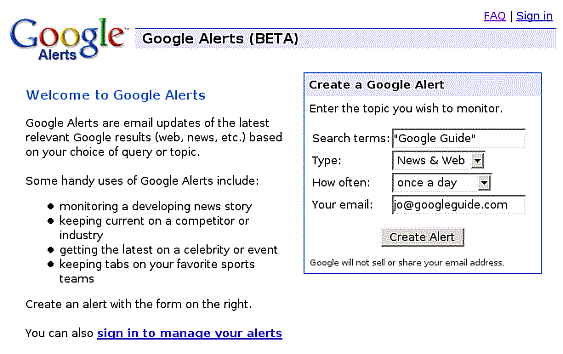
1.) Who is talking about you and what is being said? It is critical to go on different types of social media such as forums, blogs, review sites, Twitter, and so forth to see all of the commotion that is surrounding your restaurant. More specifically, Google Alerts should be set up to track any keyword and/or brand mentions. This will help look at the positive and negative talk that is being said online about your business. It is imperative to acknowledge not only the positive comments, but the negative publicity as well.
Credit: http://www.googleguide.com/

2.) Use your tools and let them do the work. Using Twitter is an invaluable resource for restaurants and since these free tools are out there for anybody to use, why not use them to your advantage? This gives businesses the ability to search Twitter for brand’s relevant keywords and also the choice to set up RSS feeds to track them. More specifically, Tweet Beep is a free service that restaurants should utilize since it automatically emails hourly updates of when a specific keyword or URL is mentioned on Twitter.


Credit: http://www.thegetsmartblog.com/

3.) Respond to your customers. It is obvious that various industries cannot ignore their customers, since this creates a negative image for their brand and will eventually cause a domino effect of problems. By engaging with their customers, reciprocation shows that you as a brand have taken interest in your customer. Furthermore, when applicable, engage them in a conversation or at the very least send them a brief thank you note. Responding to negative chatter is equally important as well in which these social media tools can assist in handling crisis situations. Identifying and developing relationships with your loyal brand endorsers is extraordinarily critical for restaurants because these people are essentially an extension of your online marketing department.

Credit: http://thenextweb.com/twitter/
4.) Use Twitter for marketing. As stated earlier, Twitter is an effective way to engage with customers and to increase customer base. Using this social media platform, it gives restaurants the ability to announce the new appetizer or drink special of the day, promote a unique restaurant event, request ideas for new menu items or specials of the day, offer prizes for people who follow you on Twitter by a certain time and date to be entered into a raffle, and even use it as a tool to listen and converse with your customers.


5.) Start a company blog. By effectively creating and using a company blog, this gives your restaurant the rare opportunity to showcase customer testimonials, pictures from specific events, menu items, share food/drink recipes, employee profiles, and anything else that relates to your restaurant. Ultimately, blogging is a great way to bring the customer into the kitchen since it provides another gateway to show customers the behind the scenes work and make them feel a part of the restaurant.


Credit: http://www.kellylkoopmans.com/

6.) Reviews. Urbanspoon.com and Yelp.com are two major websites that allows customers to post feedback. Yelp.com is a free “online urban city guide that helps people find cool places to eat, shop, drink, relax and play, based on the informed opinions of a vibrant and active community of locals in the know. Yelp is the fun and easy way to find, review and talk about what’s great — and not so great — in your world.” Yelp.com has more than 39 million monthly unique visitors as of late 2010. For restaurants, it is important to be sure to encourage your customers to post a fair review. Furthermore, if there is a negative review, try to reach out to that customer and mend the situation if possible.


Credit: http://www.popgadget.net/


Credit: http://www.tecca.com/


In order to better understand how a specific restaurant has utilized the various social media platforms, it helps to look at Manhattan-based Cuban restaurant Havana Central. To drive customer interaction, Havana Central uses social media for a series of interactive contests. Havana Central’s Social Media Manager, Tanya Castaneda explains:

“We have found that running contests has substantially increased our following on Facebook, Twitter, and our emailing campaigns. Inside the restaurant, we would promote ‘Win a Free One Hour Open Bar for You and 9 of Your Friends.’ There were 3 ways contestants could enter the drawing: by “liking” our Facebook page and writing ‘Open Bar’ on our wall; by following us on Twitter and tweeting ‘@havanacentral Open Bar’; or by signing up for our email list.”

After just 3 contests, Havana Central had increased their email list by roughly 1,000 subscribers, their Facebook fans by over 200, and their Twitter followers by over 50!


Credit: http://latinolife.com/ny/index.php

In addition to how restaurants are effectively using social media, it was fascinating to learn about Starbucks and their new mobile payment system. This has been a tremendously successful step for Starbucks. Less than three months ago on January 19, 2011, Starbucks rolled out a Starbucks Card Mobile app that allows customers to “touch and pay” for their purchases which can be used at nearly 7,000 Starbucks across the United States. This was available for both the Apple iPhone and BlackBerry applications. Like the long-standing Starbucks Card, users are now given the option to add cash to their account, but rather than keeping a plastic card in their wallets, users hold their phones up to a scanner, which recognizes a unique barcode the app presents on the phone’s screen. The purchase amount is then deducted from the customer’s account.
Credit: http://www.itechdiary.com/

The Starbucks Card Mobile app has been used by over 3 million people in only 3 months! As a bonus incentive for Starbucks customers, purchases made through the app qualify for Starbucks’ rewards program, thus allowing customers to earn free drinks. The app also helps users find the nearest Starbucks store. CEO Howard Schultz states that both mobile payments and social networking will remain vital aspects of the company’s “blueprint for growth” in the future.

It is unmistakable that social media is radically helping the restaurant industry in terms of marketing, creating brand awareness, engaging consumers, and much more.  In essence, the effectiveness of social media isn’t the tool; it is listening, answering questions, and ultimately connecting with others.

*My Personal Learning Network: I have included blogs and websites that are relevant to my project on my Twitter and Delicious accounts. My Twitter username is @kerrimoy and my Delicious username is kerri.moy.*

Thursday, March 10, 2011

Social Media Monitoring Blog Post #1: Lady Gaga

Credit: http://ladygaga-fanpage.com

For my social media monitoring project, I decided to follow Stefani Germanotta, also known by her stage name as Lady Gaga. I am sure that you have heard of this name, since she has exploded in popularity throughout the past few years as an American pop singer-songwriter. I wanted to follow her trends in online conversation and other social media because of her incredibly rapid success into fame within the competitive music industry. To monitor Lady Gaga, I utilized a variety of social media monitoring resources such as IceRocket, Social Mention, FameCount, Trendistic, Twitaholic, Google Blog Search and Insights for Search, Facebook Lexicon, YouTube, and Twitter.


Born and raised in New York City, 24 year old Lady Gaga’s success skyrocketed after the release of her debut studio album The Fame in 2008. Her two singles “Just Dance” and “Pokerface” garnered international attention and the album reached number one on the record charts of six countries. She then released the follow up extended play The Fame Monster in 2009, which included two more global chart topping singles, “Bad Romance” and “Telephone.” She just recently released her second studio album in February 2011 Born This Way.


Credit: http://www.nahb.org/default.aspx
Credit: http://www.blognetworkwatch.com
Credit: http://blogs.wyomingnews.com


Lady Gaga is not only the queen of pop, but she can be seen as the queen of social media through her effective usages of the various platforms Twitter, Facebook, and YouTube. When looking at FameCount which generates statistics across Facebook, Twitter, and YouTube to help track the trends and rank the stars, Lady Gaga is the overall leader in all categories.

Credit: http://www.famecount.com/facebook/lady-gaga


Credit: http://www.babble.com/celebrity/
I wanted to look at how much Lady Gaga’s social media popularity increased immediately after her appearance at the 53rd Grammy Awards show on February 13, 2011. Her grand entrance down the red carpet captured an enormous amount of attention since she arrived inside of a giant egg carried by four men, like an avian Cleopatra! I have to admit that this topped her past outfits such as her Kermit the frog ensemble and meat dress. By using Trendistic, it is obvious that Lady Gaga created the most buzz on Twitter during the Grammy Awards Show; a successful social media marketing tactic.


Credit: http://www.livincool.com


Credit: http://trendistic.com/lady-gaga/_30-days


Of course, Twitter was not the only site that generated so much discussion regarding Lady Gaga’s grand entrance onto the red carpet. When looking at the bigger picture, the blogging world as a whole drastically escalated as well, illustrated here by IceRocket:


Credit: http://trend.icerocket.com/trend?query1=Lady+Gaga&days=30


While looking more closely at Lady Gaga’s various uses of social media, it is critical to understand how she uses Twitter to expand her success, since this is where the majority of her attention has been centralized. Twitter is a brilliant way for Lady Gaga to build and maintain relationships with her fans. Moreover, it allows her to promote her latest work and give fans a peek into her everyday life. Lady Gaga joined Twitter on March 26, 2008 and made history on February 4, 2011 as the first person to ever reach 8 million followers! As of February 25, 2011, she had 8,415,409 followers!


Lady Gaga utilizes Twitter to keep her fans aware of what she is currently doing and to keep her name buzzing within the news. She even regularly Tweets to her audience from backstage! Clearly, she has been doing an effective job using Twitter since she is currently ranked first by followers on Twitaholic, as well as ranked first in location (New York, NY). On February 23, 2011, she tweeted:


It is equally imperative to look at Lady Gaga’s valuable usage of Facebook. According to Facebook, the human with the most “Likes” in 2010 was Lady Gaga with 24.7 million. Currently, she has 29,889,907 Facebook “Likes.” In addition, Lady Gaga also made history on July 3, 2010 when she became the first living person to score 10 million fans on Facebook which surpassed President Barack Obama and pop singer Britney Spears (Michael Jackson is the only other artist who has achieved this honor).


Just like her Twitter account, Lady Gaga effectively utilizes her Facebook page by constantly updating her wall with upcoming news, events, and thanking her fans for all of their support. On February 11, 2011, she posted: 


To further illustrate a progression of how Lady Gaga’s online presence has increased since the Grammy Awards Show, it is helpful to look at Social Mention. This site analyzes a person’s strength, sentiment, passion, and reach.
  • Strength = The likelihood that your brand is being discussed in social media
  • Sentiment = The ratio of mentions that are generally more positive to those that are generally negative
  • Passion = A measure of the likelihood that individuals talking about your brand will do so repeatedly
  • Reach = A measure of the range of influence
By looking at the progression from last month/last week/last day/ last 12 hours, we can see that Lady Gaga is mentioned pretty often (strength), the general tone is positive with every one comment being negative (sentiment), users are not really talking about her repeatedly due to a steady decline (passion), and she is reaching a decent amount of users (reach).


Credit: http://socialmention.com/search?q=lady+gaga&t=all&btnG=Search
 

Additionally, it is essential to acknowledge YouTube in correlation with Lady Gaga’s successful online presence. On February 28, 2011, Lady Gaga released her world premiere hit “Born This Way” on YouTube before anywhere else. “A YouTube video is really about letting go of control and trusting that your creativity will engage the groundswell” (Groundswell, 198). Lady Gaga joined YouTube on May 15, 2008 and became the first musical artist to reach one billion online video views. As of February 25, 2011, she has 48,394,063 channel views, 134,914,998 total upload views, and 411,567 subscribers to her channel.


Lady Gaga undoubtedly knows how to use social media successfully to connect with her fans and build relationships. This in turn, keeps them devoted to her music. By analyzing various metric resources and trends, it proves that she connects to her audience and constantly keeps them coming back for more. I will continue to track Lady Gaga's social media presence and will report back in Part 2!

Saturday, February 26, 2011

Original Post #3: I've Got Bieber Fever!

Credit: http://thenewsoftoday.com/
I will admit, I saw Justin Bieber: Never Say Never in IMAX 3D last weekend after being pressured by one of my friends. I surprised myself because I really enjoyed it! I shouldn’t have been that shocked though, considering it topped the box office with an estimated grossing of $12.4 million on its opening day from 3,105 theaters! I do listen to Justin’s music, such as “Baby” when it comes on the radio, but I never thought I would pay to see a movie about him. In a nutshell, the movie is a 3D part-biopic, part-concert film and gives viewers an inside look at the rise of Justin’s rapid transformation from a street performer in his small hometown of Stratford, Ontario to an internet phenomenon, and finally, to a global superstar. Did I mention that he is only 16 years old? That is what makes his story so inspiring.


I did not know Justin’s life story and that he got noticed utilizing social media, more specifically, through the user-generated content site YouTube and microblog (Twitter). His current manager, Scooter Braun, discovered videos of Justin on YouTube by accident. YouTube is a way to self-promote an artist to attract producers and record labels. Scooter was so impressed after watching Justin’s videos that he tracked down Justin’s mother (Pattie) who eventually gave in to allow her son to fly out to Atlanta, Georgia to meet Scooter and record demo tapes. He ultimately met R&B singer/songwriter Usher there, which started his path to fame.


Credit: http://thenextweb.com/socialmedia

It is fascinating to see how YouTube has helped launched the careers of many young singers these days, but most noticeably, Justin’s launch into the competitive music industry. Essentially, YouTube is a video-sharing website where users can upload, share, and view videos. Countless people utilize this website because unregistered users can simply watch videos without signing up for anything, while registered users have the ability to upload an unlimited number of videos. “A YouTube video is really about letting go of control and trusting that your creativity will engage the groundswell” (Groundswell, 198). It is interesting to see how other celebrities, such as Lady Gaga, achieved fame and success without the use of YouTube, by going through the grueling process of performing gigs in small clubs for a number of years until she was finally recognized and signed to Island Def Jam Records. On the other hand, Justin was signed to a major record label simply because his video on YouTube went viral.

Credit: http://thenextweb.com/socialmedi
In addition to how Justin promoted himself on YouTube, it is equally important to discuss how he effectively utilizes Twitter. Twitter is a free, microblogging service in which users send and receive messages (or tweets) that can be no longer than 140 characters. Twitter is a brilliant way for artists to build and maintain relationships with their fans. Moreover, it allows celebrities to promote their latest work to give fans a peek into their everyday lives. On Perez Hilton’s website, Justin has consistently been in the top 140 most popular Twitter users and he averages 11,000 new followers daily.
  
Clearly, many celebrities like Justin have done an exceptional job using popular methods of social media, such as YouTube and Twitter, to keep their fans in the loop of their latest singles, appearances, etc. If you think you have a great voice, it doesn’t hurt to make an account on YouTube and upload a video of yourself singing. Who knows? Maybe a producer will stumble across your video and you could become famous!

Saturday, February 5, 2011

Reading Reflections #1: The Power of Blogs!

Credit: http://www.dannyfoo.com/
Throughout the past few years, I have slowly immersed myself into the ever expanding world of social media. From my general knowledge, I mainly understand the more popular types of social media such as blogs (Blogger), social networking sites (Facebook and MySpace), microblogging (Twitter), video sharing (YouTube), photo sharing (Flickr), and professional networks (LinkedIn). However, there is so much more out there that I am currently becoming familiar with. Within the first few chapters of Groundswell, Digg.com was mentioned a few times. Even though I have heard of it before, I have never utilized this category of social news. After reading about it, Digg.com and similar websites amaze me by illustrating how much power users can have by simply commenting and voting on news stories.


Credit: http://buildinternet.com/


Essentially, it is imperative to define the term groundswell which is “A social trend in which people use technologies to get the things they need from each other, rather than from traditional institutions like corporations” (Groundswell, 9). Blogs are a great example of groundswell technology and is a way of bringing people together. A blog is “a personal (or group) journal of entries (‘posts’) containing written thoughts, links, and often pictures” (Groundswell, 19). Moreover, bloggers have the option of publishing videos and articles. This type of social media can vastly threaten institutional power since they are not regulated, in which bloggers chime in with their own opinions, create/spread rumors, and ultimately have the power to do much more.


Credit: http://www.atomicideas.com/


It is evident that blogging has drastically grown in popularity. In a study titled, “I’m Blogging This: A Closer Look at Why People Blog,” the researchers write that there are five major motivations for blogging:

1.) Documenting one’s life
2.) Providing commentary and opinions
3.) Expressing deeply felt emotions
4.) Articulating ideas through writing
5.) Forming and maintaining community forums

I further found it interesting in the reading that blogging can help companies solve the issue with having multiple sets of customers and complex products/services. “Not only can blogs help with this consideration, but they can also reassure people before, during, and after the sale. And as an added bonus, blog posts often get featured in mainstream media and Web searches, improving awareness for complex products” (Groundswell, 125).


After reading the first few chapters of Groundswell, it is evident that using new types of media can be extraordinarily beneficial to the user. Of course, when first learning how to utilize the various platforms, it may be overwhelming to the inexperienced user, but I have learned that the quickest way to use these new fields of social media is to just sign up for the account and play around with it!

Friday, January 21, 2011

Social Media Revolution!

Hello blogging world! I am excited to post my very first blog. I want to share this video with you all (that is, if you haven't seen it yet). This video was shown three times to me in class the past two semesters. The facts are mind blowing. Enjoy!